June 14, 2026
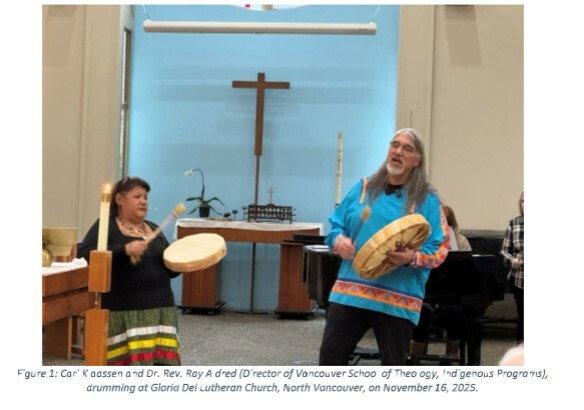
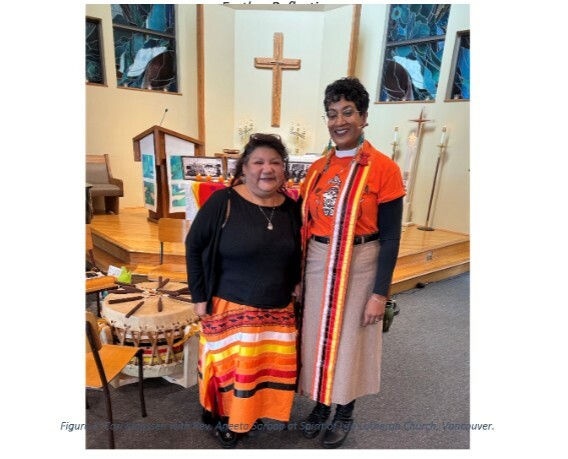
This month, we recognize National Indigenous Peoples Day on June 21. The BC Synod Diversity, Equity and Inclusion Committee interviewed two leaders within our synod, Boston Laferté and Carolyn (Cari) Klaassen, to hear some of their reflections on this important national day.
Boston Laferté is Michif and grew up on Treaty 8 territory. He just completed his JID/JD (Indigenous Legal Orders and Canadian Common Law) joint degree at the University of Victoria, and is a seminary student at Lutheran Theological Seminary Saskatoon. He is a member of Lutheran Church of the Cross in Victoria.
Carolyn (Cari) Klaassen, is a student at Vancouver School of Theology (VST) in the Indigenous Masters of Divinity program. She has a certificate in Theological Studies from VST and a BA in Criminology. She is a Sixties Scoop survivor and was the leader in bringing Truth and Reconciliation to the Lutheran Church. She continues to bring Indigenous Service to the Church.
Cari invites everyone to tune into service at Lutheran Church of the Cross in Victoria on June 21 for a special service, led by herself and Rev. Tony Snow. You can find their livestream on their landing page: https://www.lutheranvictoria.ca/#main_menu
What does National Indigenous Peoples Day mean to you?
Boston: To me, Indigenous Peoples Day is an opportunity to celebrate the joys of being Indigenous. It is also a day to connect with Indigenous people across Turtle Island.
Cari: This Day recognizes First Nation cultures across Canada, since June 21st is the summer solstice. It shows First Nations people that we recognize the tragedies that Canada did to First Nations people from the beginning when colonists first came to this so-called empty land. It recognizes the genocide of First Nations people backed by the first Prime Minister of Canada, John A. MacDonald, stemming from what was called “the Indian problem”; First Nations people were seen as savages and worshipped the devil as they did not follow the colonists’ religion. But, we had our own language, our own culture, and our own ceremonies. I want people to know that it still causes hurt that it is only after so many generations that Canada is now recognizing First Nations people and embracing us. National Indigenous Peoples Day is a day of prayer, bringing community together, celebrating our ceremonies and sharing our beliefs.
What do you think is the church’s role in celebrating or recognizing this Day?
Boston: I think as a church with a goal to care for members and to fulfill a mission of care and inclusion out in the world, it is important to celebrate and recognize National Indigenous Peoples Day. Especially in a church with a fairly white demographic, celebration lets Indigenous members across the ELCIC see that they are seen, loved, and appreciated.
Cari: I have never been consulted on what a congregation should do or the role of the church in relation to National Indigenous Peoples Day. I’m not sure what the church’s role is, but have pondered about this. I wonder if some churches celebrate or recognize this Day because it is the right thing to do or because other churches do it. I wonder if churches understand what the true meaning of National Indigenous Peoples Day is. I think it is important to consult First Nations people on what is an appropriate way to recognize this Day, rather than from a white person’s view of what is “politically correct”. We want to break past patterns, when white culture taught First Nations culture.
How do you see faith, spirituality, culture and community connecting in your life?
Boston: My faith and my culture/spiritual practices are completely connected. I feel as much connection with God in smudging, drumming, fiddling, and the weaves of a sash as I do in Scripture, prayers, the bread and wine, and liturgy. My Luther Bible and Playmobil Martin Luther sit on the same shelf at home as my drum, abalone shells, sage, and sweetgrass.
Cari: Since I have connected with my Ojibway spirituality and with other First Nation Christians, I have felt closer to Creator. I have also connected with my brother who was a Shaman in my community, and he taught me all the spiritual practices of my people. For example, understanding that visions and dreams are real and come from Creator. My brother knew I was Creator’s choice to carry on what he was. When he passed during Covid I was grateful for all the teachings he gave me and am grateful for Creator for being in my life. Before I got really sick, I had a vision/dream and Creator called me to keep doing the work I started in the Lutheran Church on Truth and Reconciliation, which I started over 15 years ago. When I was physically sick and on the verge of death, I accepted the fact that I may die but prayed to Creator. I told Creator that I was ready to go home to be with Him and that my life was in His hands; I accepted what He had planned for me. I was in need of a kidney, and when I received one, I rededicated my life to continue to do Truth and Reconciliation in the Church. To teach what needs to be done, to teach what Creator wants done in the Church.
What are some things that you wished non-Indigenous church member understood about Indigenous peoples today?
Boston: That Indigenous peoples are not an “other” that are beyond churches, existing only for Truth and Reconciliation committees to discuss and connect with. There are Indigenous peoples in the church now that don't always feel recognized or cared for. We are here, and we are seeking the same connections with God and the rest of the Body of Christ that everyone else is.
Cari: When I started to work on Truth and Reconciliation in the Lutheran Church, there was a lot of push back. It was new and some people were wary about it. Some people felt it was not following the usual traditions of the Church. But I disagree. Creator God wants simplicity and wants us to hear the truth; that seeing things that are new is fulfilling. I just wanted to share the Gospel and for others to see the joy that I have seen everyday when I have encountered Creator. We need to remember that we are always learning new things. By being open to Creator God and understanding, we see good things. I would like non-Indigenous people in the church to embrace Native Spirituality. To understand how beautiful it is and how it has shaped First Nations beliefs in Creator God. To understand that the teachings we receive by Creator were passed down orally from generations. Long before churches were formed. I would love to see each congregation have an Indigenous service each month and not just twice a year.
Cari shared some additional quotes as a reflection for National Indigenous Peoples Day:
“Often people would gather around the sacred fire for prayers, meditations, telling stories, sharing experiences, and encouraging one another in the journey of life. Many of us felt the presence of God, the Creator, and were touched. We felt a deeper understanding of our faith as we sat around the fire.”
- These Mountains Are Our Sacred Places, by Rev. Dr. Chief John Snow at p. 234
“Prayer is one precious gift the church has to offer the world. Prayer deepens our communion with God and with all Creation. It nudges us to examine who we are as individuals, as a community, and importantly it asks us also to examine who we seek to become. Through this intimate connection we can pour out our gratitude, our concerns, and our hopes.
In reflection of the Elders’ wisdom we offer this prayer:
God, Creator and Great Mystery, we praise you for the Sacred Fires that burn today and for the prayer-filled smoke that you receive and bless. We offer our deep gratitude that the Fire’s light informs and guides our journey. We pray, just as the Elders prayed, for renewal and for the restoration of beauty to the land and its people.
We acknowledge the diverse and abundant gifts of Canada’s Indigenous Peoples. We recognize that their knowledge and wisdom have benefited generations past and present, and that this blessing will continue for generations to come. We remember the many who are committed to the healing of family, community, and nations.
We pray for Mother Earth, the waters, the winds, for our siblings the animals, birds, and fish, and all of life that surrounds us. We pray that we will walk the good Red Road of life, and that we will walk with courage, honesty, humility, love, respect, truth and wisdom.
We offer this prayer in humility and hope, and in the name, of our brother Jesus, the one who lights our path to wholeness, justice and peace. Amen.”
Offered by Bill Snow, Stoney Nakoda First Nation, Alberta, member of the Indigenous Justice and Residential School Committee; Rev. Maggie Dieter, Executive Minister, Aboriginal Ministries and Indigenous Justice, The United Church of Canada at https://united-church.ca/blogs/round-table/why-indigenous-day-prayer

-
Location